
Article at a Glance
- Weight regain after stopping a GLP-1 is common, but the amount varies considerably from person to person.
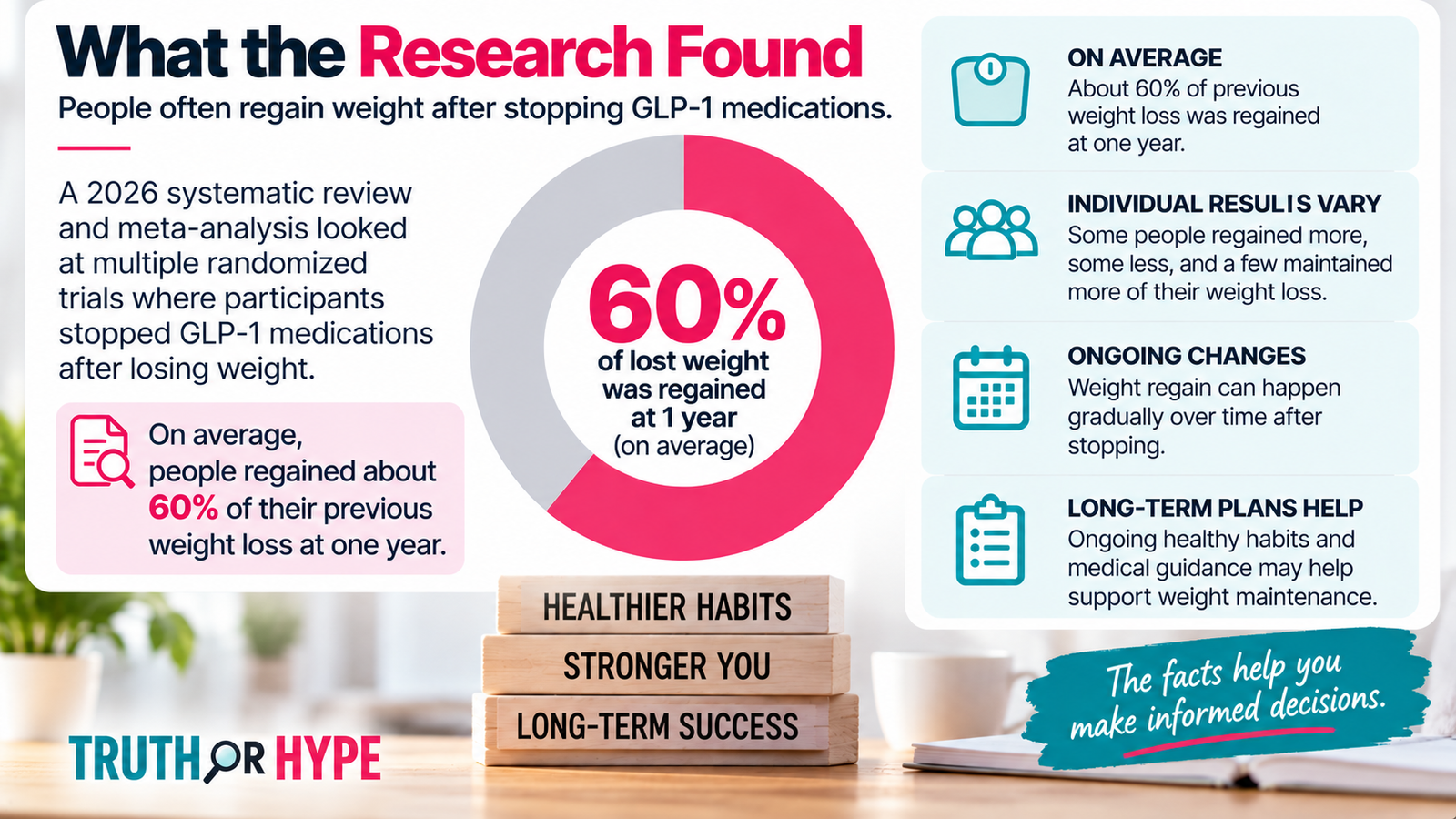
- A 2026 review found that, on average, people in randomized trials regained about 60% of the weight they had lost within one year after stopping GLP-1 treatment.
- Appetite and thoughts about food may become more noticeable again as the medication’s effects wear off, although everyone’s experience is different.
- Some improvements in blood sugar, blood pressure and other cardiometabolic measures can move back toward baseline after treatment ends, particularly when substantial weight is regained.
- There is no universally established GLP-1 tapering schedule that consumers should follow on their own. If you’re considering stopping—especially if you have diabetes—talk with the clinician managing your treatment first.
Quick Answer: What Happens When You Stop Taking a GLP-1?
You lost the weight. Your clothes fit again. Maybe your blood sugar improved. And now you’re asking the question almost everyone eventually asks:
Do I have to keep taking this forever?
The answer isn’t as simple as yes or no.
Research shows that weight regain is common after GLP-1 treatment ends, and some of the metabolic improvements achieved during treatment can move back toward where they started.
But that doesn’t mean everyone regains all the weight they lost—or that stopping treatment is always the wrong decision.
What matters is understanding what may happen before you stop and having a plan with your healthcare provider if treatment needs to change.
Why Can Weight Come Back After Stopping a GLP-1?
GLP-1 medications don’t permanently remove the biological forces involved in appetite and body-weight regulation.
While you’re taking medications such as semaglutide or tirzepatide, the treatment can reduce appetite and food intake and improve metabolic measures. When treatment ends, that pharmacologic support ends too.
That matters because obesity is generally managed as a chronic condition rather than something that is permanently “cured” once a particular number appears on the scale.
The Endocrine Society’s obesity-treatment guidance, for example, describes weight-management medications as tools that may be used to promote long-term weight maintenance in appropriate patients alongside diet, physical activity and behavioral changes.
That’s an important distinction.
Reaching your goal weight doesn’t necessarily mean the biological factors that contributed to weight gain have disappeared.
How Much Weight Do People Regain After Stopping?
This is where the research gets particularly interesting.
A 2026 systematic review and meta-regression examined 48 studies involving people who stopped GLP-1 receptor agonists.
Among six randomized trials included in the researchers’ model, participants regained approximately 60% of the weight they had lost during treatment by one year after stopping.
That’s an average—not a prediction of what will happen to you.
Another major piece of evidence comes from the STEP 1 semaglutide trial extension.
Participants receiving semaglutide 2.4 mg had lost an average 17.3% of their body weight during treatment. One year after semaglutide and the study’s lifestyle intervention were withdrawn, participants had regained 11.6 percentage points, or roughly two-thirds of their previous weight loss.
They were still, on average, below their original starting weight.
That’s something sensational headlines often leave out.
Truth or Hype? Everyone Gains All the Weight Back After Stopping a GLP-1
HYPE.
Weight regain is common. “Everyone gains everything back” is not what the evidence says.
The amount regained differs substantially between individuals.
The 2026 review estimated an average regain of about 60% of prior weight loss at one year.
The researchers’ longer-term modeling suggested substantial regain may continue, but estimates beyond 52 weeks involved extrapolation rather than equivalent long-term observed trial data.
That’s why we’d be skeptical of either extreme:
“Stop the drug and you’ll definitely regain every pound.”
Too absolute.
“Just develop better habits and you’ll definitely keep all the weight off.”
Also too absolute.
The evidence lives somewhere in the middle.
What Happens to Hunger and “Food Noise”?
This may be the change people notice before they notice anything on the scale.
Many GLP-1 users describe having fewer thoughts about food, less interest in large portions or less persistent hunger while receiving treatment.
Online, that experience has become popularly known as reduced “food noise.”
When treatment stops, some people report those sensations becoming more noticeable again.
But we’d be careful here.
You will sometimes see claims that stopping GLP-1 treatment causes a specific “ghrelin surge” or that food noise inevitably returns at full force. The evidence doesn’t justify making those universal promises.
A better way to understand it is simpler:
The medication was helping regulate appetite. Once that effect is removed, you shouldn’t assume your appetite will remain exactly as it was during treatment.
And that possibility is worth preparing for before the final dose rather than discovering it afterward.
What Happens to the Health Improvements You Made?
The scale isn’t the whole story.
In STEP 1, several cardiometabolic improvements seen during semaglutide treatment moved back toward baseline during the year after treatment was withdrawn.
More recent tirzepatide evidence tells a similar story.
A 2026 analysis of the SURMOUNT-4 trial found that greater weight regain after tirzepatide withdrawal was associated with greater reversal of improvements in measures including waist circumference, blood pressure, cholesterol-related measures and glycemic markers.
Again, that doesn’t mean every health benefit disappears the moment somebody stops treatment.
It means stopping deserves more thought than simply watching the scale.
What If You Take a GLP-1 for Type 2 Diabetes?
This is especially important.
If a GLP-1 medication is part of your diabetes treatment, don’t treat stopping it as simply a weight-management decision.
A systematic review examining metabolic changes after GLP-1 discontinuation found that, among participants with type 2 diabetes, HbA1c increased after treatment cessation on average.
Your individual response depends on your diabetes, other medications, glucose control and overall treatment plan.
That’s why someone using a GLP-1 for diabetes should discuss stopping or changing treatment with their clinician rather than simply discontinuing it because they’ve reached a target weight or the medication has become expensive.
Why Do People Stop GLP-1 Treatment?
Sometimes the decision has nothing to do with whether the medication is working.
People may stop because of:
- Cost or loss of insurance coverage
- Side effects
- Difficulty obtaining medication
- Pregnancy planning or another medical consideration
- A treatment change recommended by their clinician
- Reaching a goal weight and wondering whether medication is still necessary
- Simply not wanting indefinite treatment
Coverage, pricing and treatment options are also changing quickly, which we track in our guide to the biggest GLP-1 changes of 2026.
And this is where the real-world GLP-1 conversation gets complicated.
Knowing that continued treatment may help maintain results doesn’t make continued treatment affordable or appropriate for everyone.
Some consumers also start looking at lower-cost alternatives, which is why it’s important to understand the differences between compounded and brand-name GLP-1 medications before making that decision.
That’s one of the reasons the question “What happens if I stop?” matters so much.
Should You Taper a GLP-1 Instead of Stopping Suddenly?
Here’s where we need to separate what sounds reasonable from what has actually been established.
There is growing interest in whether gradual dose reduction, lower maintenance dosing or other strategies could help some people transition off treatment.
But there is not a universally established tapering protocol that we can responsibly give you.
So we’re not going to hand you an internet schedule saying:
Week 1: take this dose.
Week 5: take this dose.
Week 9: stop.
That’s a medical treatment plan, and it belongs between you and the clinician prescribing your medication.
If you’re considering stopping, ask your provider whether stopping directly, reducing the dose, changing medications or continuing at some form of maintenance treatment makes sense for your situation.
Can Diet and Exercise Prevent Weight Regain?
They matter enormously—but we wouldn’t promise that lifestyle changes alone will completely prevent regain.
That’s another place where consumers can get unfairly blamed.
Weight management after substantial weight loss involves biology as well as behavior.
Nutrition, physical activity, resistance exercise, adequate sleep and behavioral support remain important parts of long-term weight management.
But clinical research shows substantial weight regain can occur after medication withdrawal even when people have participated in lifestyle interventions.
So the useful question isn’t:
“Can I just use willpower instead?”
It’s:
“What combination of treatment, nutrition, activity and ongoing support gives me the best chance of maintaining the health improvements I’ve made?”
That’s a much better conversation to have with your healthcare team.
Are GLP-1 Medications Supposed to Be Taken Forever?
There isn’t one answer for everyone.
For some patients, long-term pharmacologic treatment may be appropriate because obesity or diabetes requires ongoing management.
For others, side effects, cost, changing health circumstances or personal preferences may lead to a different treatment plan.
What the evidence increasingly tells us is that GLP-1 treatment shouldn’t automatically be viewed as:
Lose weight → hit goal → stop medication → problem solved.
The underlying condition may still require treatment even when the number on the scale has changed.
That’s why the decision about continuing treatment should be based on more than reaching a goal weight.
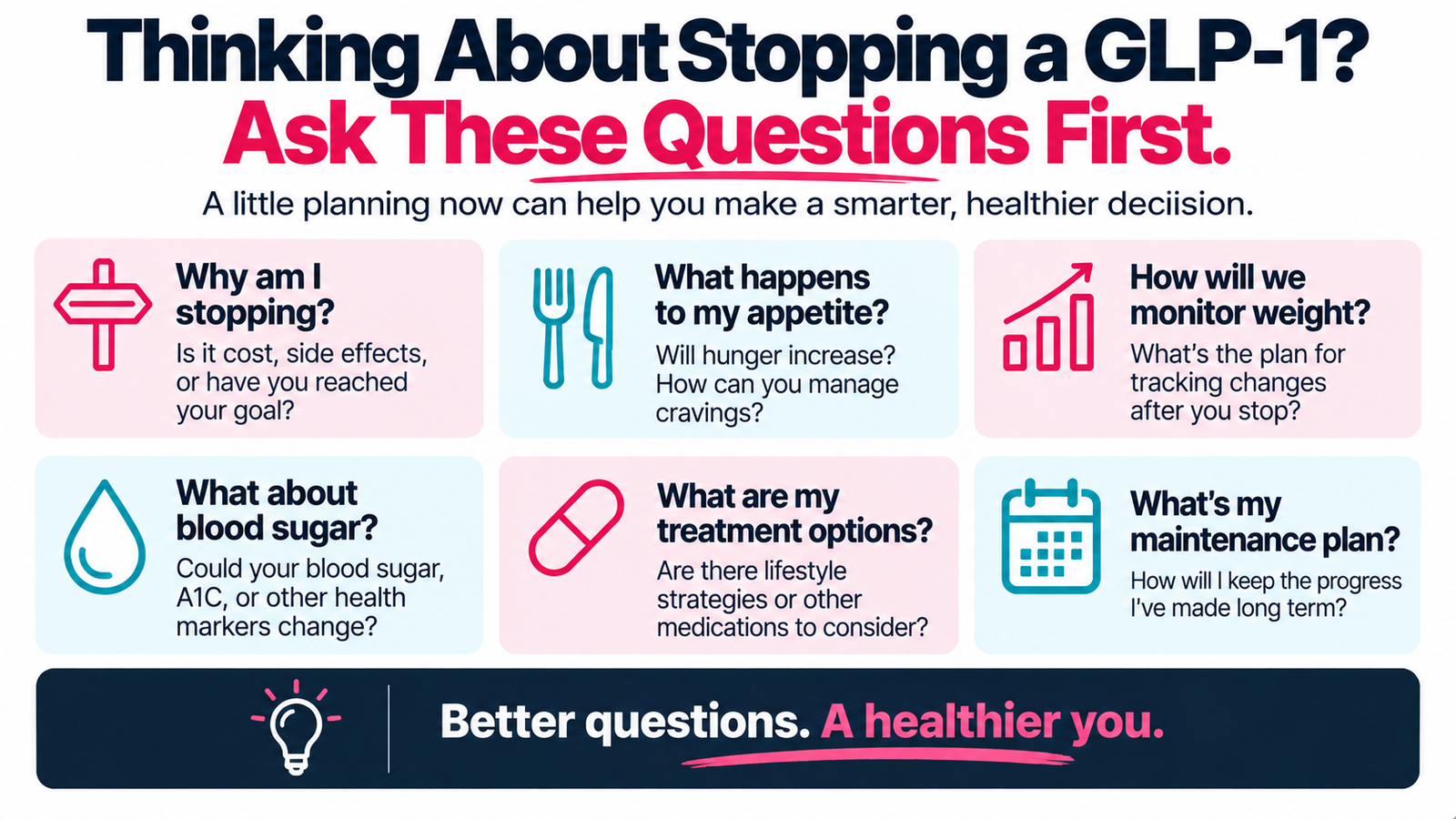
What We’d Ask Before Stopping a GLP-1
Before discontinuing treatment, these are the questions we’d want answered:
- Why am I stopping?
- Was the medication prescribed for obesity, diabetes, cardiovascular risk—or more than one reason?
- What happened to my blood sugar, blood pressure and other health markers while I was taking it?
- What should I expect my appetite to feel like afterward?
- How will we monitor my weight after treatment ends?
- If I have diabetes, how will my glucose be monitored?
- Does another medication need to replace this one?
- Is continued treatment medically appropriate but financially difficult?
- Are there legitimate coverage or assistance options I haven’t explored?
- What nutrition and activity plan can I realistically maintain?
- What should trigger a call to my healthcare provider?
- If substantial weight returns, what are my options?
The objective isn’t to scare someone into staying on medication.
It’s to make sure stopping is an informed decision rather than an assumption that the treatment is finished.
Bottom Line
So, what happens when you stop taking a GLP-1?
For many people, some weight returns. Appetite may become more noticeable again.
And some improvements in metabolic health can move back toward where they were before treatment.
But there isn’t a rule saying everyone will regain every pound.
One of the strongest 2026 analyses found that people in randomized trials regained about 60% of their previous GLP-1-associated weight loss at one year on average. Individual outcomes varied.
That makes the most important question less about whether stopping is “good” or “bad.”
It’s whether you understand what may happen next—and have a plan for it.
Because losing the weight is one part of the journey.
Keeping the health gains you’ve worked for is the next one.
Frequently Asked Questions
How fast can weight return after stopping a GLP-1?
Weight regain can begin during the months after treatment ends, but there isn’t one timeline that applies to everyone.
A 2026 systematic review found a decelerating pattern of regain after GLP-1 cessation, with about 60% of previous weight loss regained at one year on average in the randomized trials used for its primary model.
Will I regain all the weight I lost?
Not necessarily. Regain is common and can be substantial, but individual outcomes vary. In the STEP 1 extension, participants regained roughly two-thirds of their previous semaglutide-associated weight loss during the following year and, on average, remained below their original starting weight.
Does hunger come back after stopping?
Some people report increased hunger or the return of thoughts about food as the medication’s appetite effects wear off. How noticeable that is varies from person to person.
Can I restart a GLP-1 later?
Potentially, but don’t assume that you should restart at your previous dose. Whether restarting is appropriate—and what dose should be used—depends on the medication, how long you’ve been off it and your medical circumstances. That decision should be made with the prescribing clinician.
Is it dangerous to stop a GLP-1 suddenly?
GLP-1 medications aren’t generally discussed as causing a classic withdrawal syndrome. But stopping can still have important consequences, particularly if the medication is being used to manage type 2 diabetes or other health risks. Don’t change a prescribed treatment plan without discussing it with the clinician managing your care.
Medical note: This article is for educational purposes and isn’t individual medical advice. Don’t stop, restart or change the dose of a prescription GLP-1 medication without discussing the decision with an appropriate healthcare professional.
Last updated: September 2026